
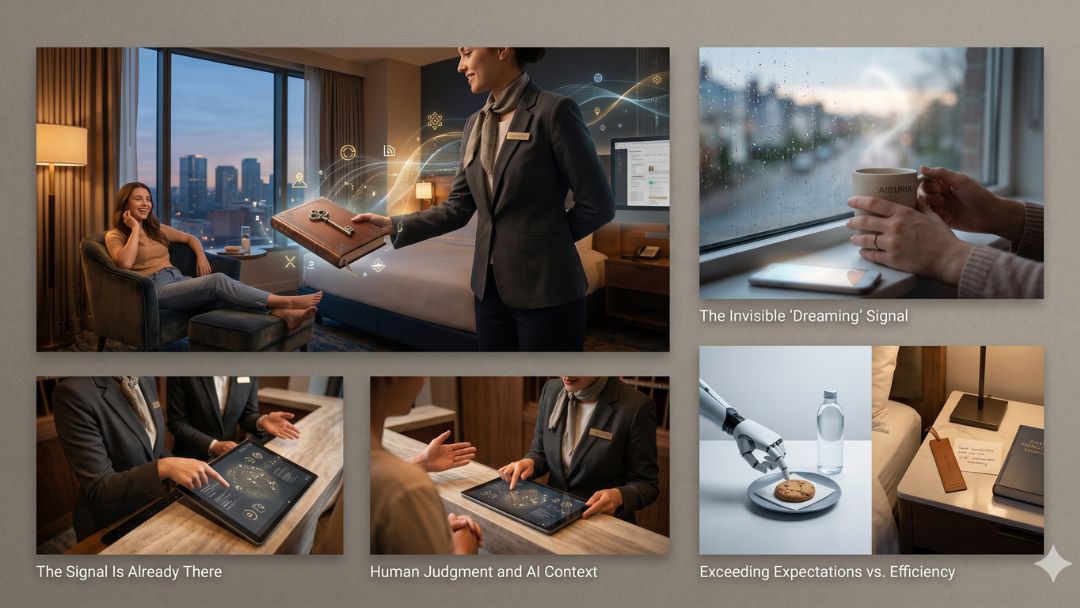
There is a moment that happens on a Tuesday evening, or a Sunday morning, or during the thirty quiet minutes on a lunch break when someone opens a browser and types the name of a city they have been thinking about for weeks. They are not ready to book anything. They are not comparing prices. They are doing something far more significant and far more fragile than any transaction: they are beginning to dream, and in that dreaming, they are generating one of the most powerful signals in all of hospitality a signal that most hotels will never see, never interpret, and never respond to, because they are not yet equipped to listen at that frequency.
What gets missed in that moment is not a click or a data point. What gets missed is the beginning of a relationship, and inside that beginning is everything a hotel would need to know to deliver an experience so precisely right for that specific person that it would feel less like service and more like a conversation that started long before they ever walked through the door
Every Stage of the Journey Has a Voice. Most Hotels Only Hear the Last One.
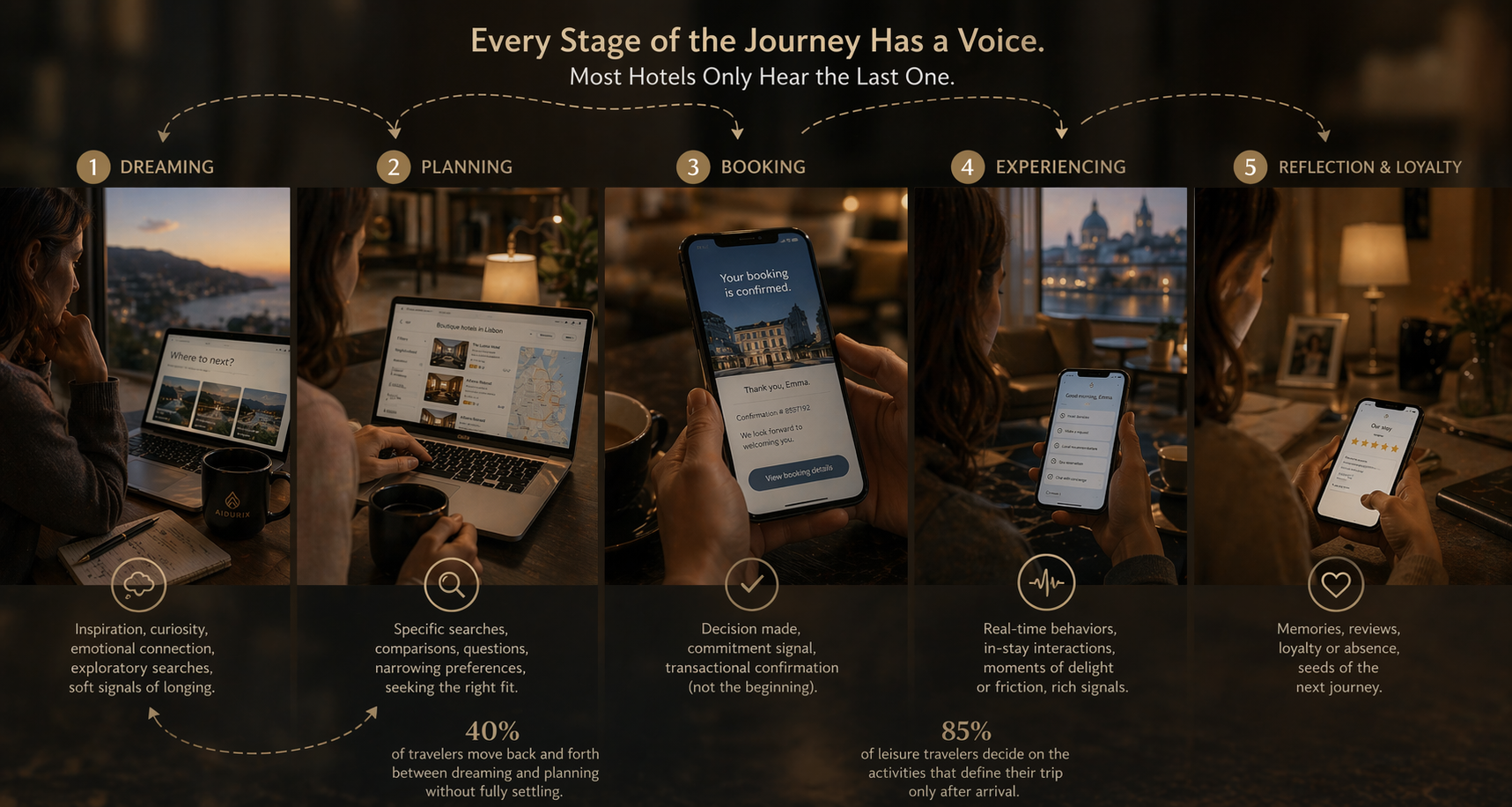
The travel customer journey has always been understood as a sequence of stages, and that understanding is accurate as far as it goes. A traveler moves from dreaming about a destination to planning the specifics, from planning to booking, from booking to experiencing the trip itself, and from the experience outward into reflection, memory, and the quiet formation of loyalty or its absence. What this sequence obscures, however, is the much richer and far less linear truth about how travelers move through these stages and what they are communicating at each one.
The dreaming stage is not a passive warmup act before the serious business of planning begins. It is where preferences are formed, where emotional associations are built, and where a traveler’s sense of what kind of experience they deserve starts to take shape. The signals generated here are soft, exploratory, and repetitive in ways that reveal genuine longing rather than provisional interest. A traveler who searches for the same destination from three different angles over the course of two weeks is not gathering information. They are falling in love with a possibility and embedded in those searches is a portrait of who they are as travelers, what they value, what they fear, what they hope for that is more revealing than any guest profile form ever designed. The hotel or hospitality brand that understands this and shows up with something resonant in that moment earns a place in the consideration set that competitors who only appear at the booking stage can never fully displace.
The planning stage generates a different and more structured layer of signal intelligence. Here the traveler has narrowed the field but not closed it, and what they are really asking is not just which hotel has availability on which dates, but which property understands who they are and what kind of stay they are trying to create. The signals at this stage are more specific searches for hotels with amenities, questions about neighborhoods, comparisons between property types and they reward a different kind of listening. A hotel that can read the planning signal with enough intelligence to understand not just what a guest is looking for but why it has moved from transactional awareness to something that begins to approximate genuine knowing. And genuine knowing, accumulated across multiple signal layers before a guest ever arrives, is the foundation of the only kind of personalization that feels personal.
The booking signal is where most hotels finally begin to pay attention, and by this point, the traveler has already made most of the emotional decisions that will determine their relationship with the property. The booking is confirmation, not a beginning. Treating it as the beginning of the guest relationship is like starting to read a novel at the last chapter and being confused about why the characters feel the way they do.
The experiencing stage generates real-time signals of extraordinary richness and velocity: what the guest searches for after arrival, which amenities they use and which they ignore, what questions they ask at the front desk and which ones they answer themselves on the phone, which moments produce delight and which produce friction. These in-stay signals are the ones that make truly adaptive personalization possible the kind that responds to who the guest is revealing themselves to be in real time rather than who the booking form suggested might be. And the post-stay reflection stage, which hospitality has historically reduced to a review score and a satisfaction survey, contains within it the seeds of the traveler’s next journey and the brand associations that will determine whether your property is considered or not the next time that Tuesday evening dreaming moment arrives.
What is remarkable, and what the data consistently bears out, is that over 40 percent of travelers move back and forth between the dreaming and planning stages without ever fully settling in either one, and that 85 percent of leisure travelers decide on the activities that will define their trip only after they have already arrived at the destination. This means that the signal picture is not a straight line from curiosity to conversion. It is a living, breathing, constantly shifting expression of a human being trying to figure out what they want from an experience that matters enough to them that they are willing to spend real money and real time on it. Reading that picture with intelligence requires something beyond data collection. It requires interpretation, and interpretation requires the kind of judgment that only becomes possible when human understanding and AI capability operate together.
The Gap Between What Hotels Capture and What Travelers Are Actually Saying
Most hotel operations today have invested meaningfully in understanding the booking signal and the post-stay signal. They know their occupancy curves, their RevPAR trends, their review scores, their direct booking rates, and their cancellation patterns. What they have not yet built is the capacity to read the earlier and softer signal layers where the real competitive advantage is available, and where the raw material for something that the industry has talked about for years but almost never actually delivered genuine hyper-personalization has been quietly accumulating.
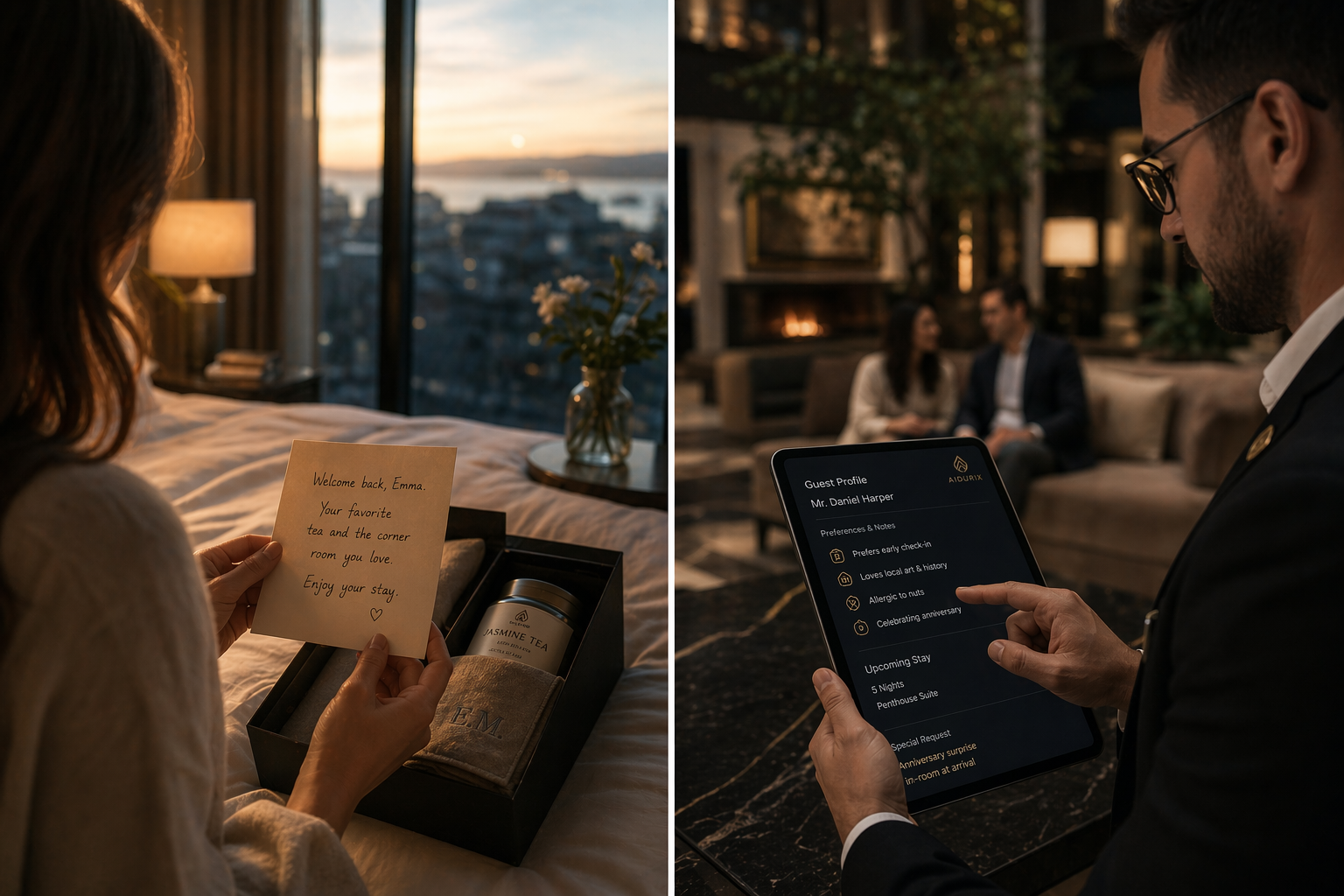
The word hyper-personalization gets used so frequently in hospitality that it has started to lose its meaning, and what usually gets described under that label is something far more modest than the name implies. A welcome amenity based on a dietary preference captured at booking, a room preference saved from a previous stay, a birthday acknowledgment generated by a CRM rule these are good things, but they are not hyper-personalization. They are the hospitality equivalent of a form letter with the recipient’s name typed in the salutation. Genuine hyper-personalization is something fundamentally different in terms of genuine hyper-personalization. It is the capacity to respond to a specific person’s specific emotional state and specific desire at a specific moment in their journey with something so precisely right that it could not have been intended for anyone else.
That capacity does not come from booking data. It comes from the full signal picture, read intelligently across every stage of the journey. The dreaming signal tells you what the traveler has been longing for. The planning signal tells you how they think about getting what they want. The in-stay signal tells you how they are experiencing your property relative to what they imagined. The post-stay signal tells you what they will carry forward and what they will leave behind. When a hotel team can hold all those layers simultaneously and interpret them with genuine intelligence, the personalization that becomes possible is not incremental. It is transformational.
The dream signal and the early planning signal are almost entirely invisible to the average hotel operation. These signals live in search behavior, in content engagement patterns, in the accumulation of micro-interactions across platforms that together reveal not just what a traveler is considering but what kind of traveler they are and what they genuinely care about. And because 72 percent of travelers are more loyal to their immediate need in a given moment than to any brand, the property that earns their attention at the dreaming stage with something genuinely useful and emotionally resonant does not just win a booking. It wins a relationship that is far more durable than any loyalty points program ever constructed, because it is rooted in a depth of understanding that most properties will never bother to develop.
The problem is not that this signal intelligence is unavailable. It is that most hotel teams have never been equipped to access it, interpret it, or act on it in the moment when action matters. The gap between the signal that exists and the signal that gets heard is not primarily a technology problem. It is a navigation problem. Teams need a way of understanding what the signals mean in the context of their specific property, their specific guest profile, and their specific competitive positioning. They need the capacity to translate raw signal intelligence into genuine hospitality judgment, and that capacity does not arrive with a software subscription. It has to be built, developed, and reinforced over time.
What the Collaboration Between Human Judgment and AI Intelligence Actually Looks Like
The conversation about AI in hospitality has been dominated by two narratives that are both partially right and both fundamentally incomplete. The first narrative says that AI will eventually replace human judgment in most hotel functions, and that the properties that adopt it fastest will win. The second narrative says that hospitality is irreducibly human and that AI can only ever be a supporting character in a story that is ultimately about personal connection. Both narratives miss the most important truth, which is that the collaboration between human judgment and AI intelligence produces something qualitatively different from what either can produce independently, and that understanding what that something looks like in practice is the real frontier.
Human judgment in hospitality brings what cannot be algorithmically approximated: the ability to feel the emotional register of a situation, to understand why a guest who is technically satisfied with their room might still be quietly disappointed, to know when a policy should be bent because the situation calls for something more than compliance. These capacities are not supplemented by AI. They are elevated by it, because a team that is no longer overwhelmed by the volume and velocity of operational signals has the cognitive space to bring genuine human attention to the moments that deserve it most. And crucially, they have the guest context assembled from signal layers that human attention alone could never have held to make that attention genuinely useful rather than generically warm.
AI intelligence in hospitality brings what human attention alone cannot sustain: the ability to hold thousands of signal layers simultaneously, to surface patterns across a guest journey that no single team member could track in real time, to identify the moment when a traveler’s expressed preference is about to diverge from what would make their stay extraordinary. This is not surveillance. It is the kind of attentiveness that a great concierge at a legendary property would have provided in the era when the guest list was small enough to know every name and remember every story. AI makes that attentiveness scalable without making it mechanical, provided the human judgment is there to interpret what the AI surfaces and decide what to do with it.
The Blue Ocean principle of fair process offers a framework for understanding why this collaboration matters so profoundly in hospitality specifically. When travelers feel genuinely engaged in the process of their own experience when they feel explained to rather than managed, when they have clarity about what to expect at every stage of their journey something shifts in the quality of their relationship with a property that no price point or amenity package can replicate. This is the hospitality version of fair process in action, and achieving it consistently requires exactly the kind of signal intelligence that human and AI collaboration makes possible. The team that knows a guest is in the late dreaming stage and serves them something that deepens their excitement rather than pushes them toward a booking button has practiced fair process at a level most hotel marketing departments have ever attempted.
From Reading the Signal to Shaping the Inspiration: The Most Important Distinction in Modern Hospitality
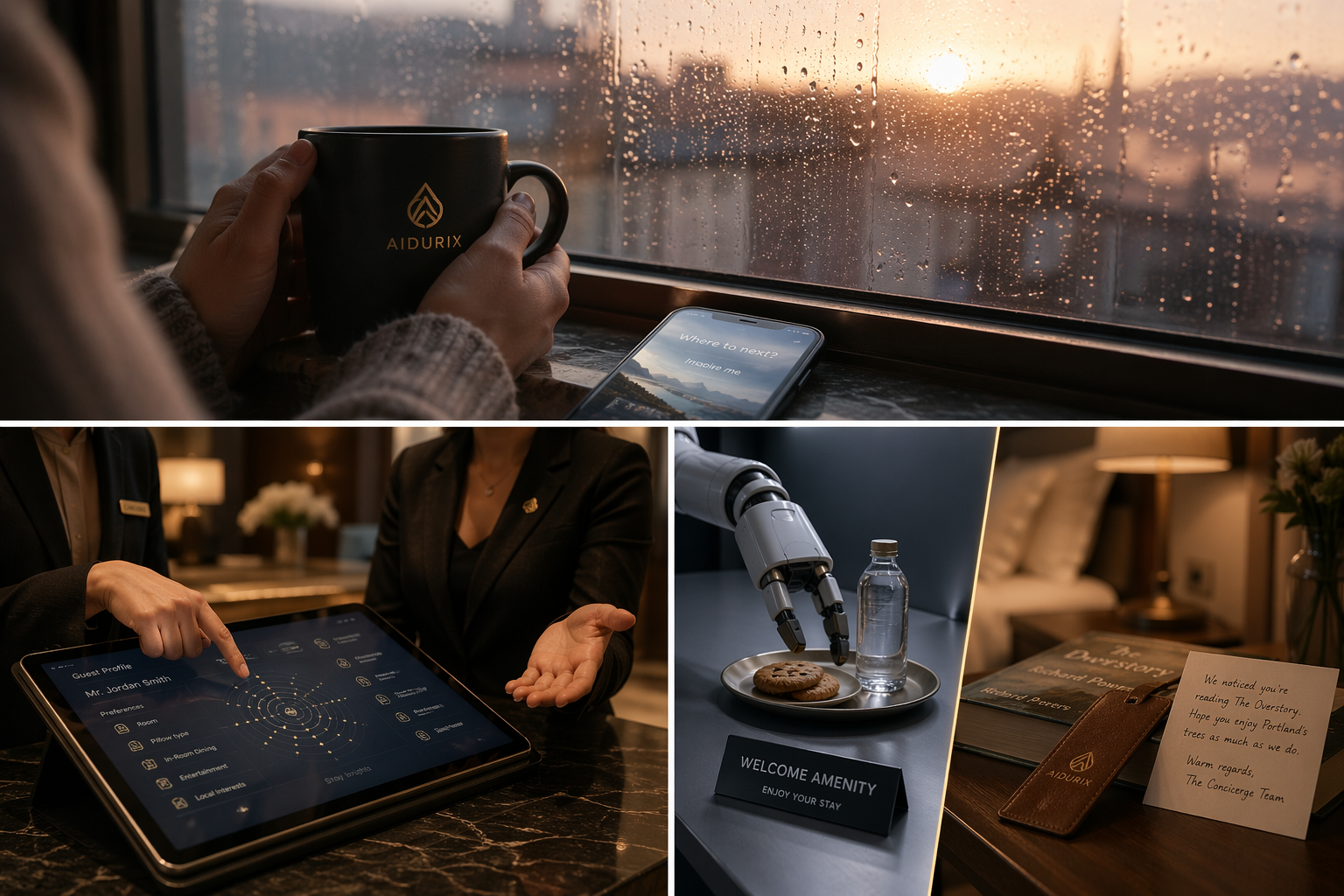
There is a meaningful ethical and strategic line between two different uses of signal intelligence in the traveler journey and understanding that line is essential for any hotel that wants to build the kind of relationships that produce genuine loyalty rather than reluctant repeat visits.
The first use of signal intelligence is manipulative, even when it is practiced without any conscious intent to manipulate. It treats the traveler’s signals as inputs into a targeting system designed to move them toward a predetermined outcome, usually a booking, as efficiently as possible. It reads the dream signal and serves a discount. It reads the planning signal and serves urgency. It reads the booking signal and serves upselling. Every response is calibrated to extract maximum transactional value from the traveler’s current emotional state, which means every response is fundamentally disrespectful of what the traveler is communicating.
The second use of signal intelligence is something entirely different, and it is the one that the best hospitality operations in the world are beginning to understand. It treats the traveler’s signals as an invitation to be genuinely present with something useful, something resonant, something that helps them become a better version of the traveler they are already trying to be. When a hotel reads the dream signal and responds with content that deepens the traveler’s imagination rather than redirecting it toward a conversion funnel, it is not just doing better marketing. It is building the kind of trust that makes the eventual booking feel like a natural conclusion to a relationship rather than a transaction concluded under the influence of clever targeting.
This is the difference between reading intent and shaping inspiration, and it matters enormously for the long-term trajectory of a hotel brand. The properties that understand signal intelligence as primarily a tool for inspiring travelers to become more fully themselves in the context of an experience your hotel can provide will build loyalty that is genuinely difficult to compete against, because it is rooted in something that cannot be purchased or copied: the feeling of being understood before you ever arrived.
Signal Intelligence and the Practice of Unreasonable Hospitality
There is a concept in the best corners of the hospitality world that does not get nearly enough serious operational attention, and that is the idea of unreasonable hospitality the deliberate practice of giving someone more than they expected, more than they asked for, and more than any reasonable standard of service would require. It sounds like a luxury privilege, something reserved for Michelin-starred restaurants and flagship properties with unlimited resources. But the deeper truth about unreasonable hospitality is that it has almost nothing to do with budget and almost everything to do with knowing someone well enough to surprise them in a way that feels inevitable in retrospect.
Signal intelligence is the operational infrastructure that makes unreasonable hospitality scalable and repeatable rather than occasional and accidental. Here is why that matters: the reason most hotels can only practice unreasonable hospitality sporadically a random upgrade here, a handwritten note there, a manager who happened to overhear a conversation and acted on it is that the information required to do it deliberately has never been systematically gathered, held, or acted upon. The dreaming signal of a traveler who has spent three weeks researching anniversary trip experiences in your destination tells you something about what that stay needs to be before they ever book it. The planning signal of someone who has looked at your spa menu six times but not the restaurant tells you where their attention is genuinely anchored. The in-stay signal of a guest who has searched for live music venues twice from your property’s Wi-Fi tells you what their evening is missing and gives you the chance to put something in their path that they will talk about for years.
None of these gestures require a large budget. They require knowledge, and knowledge requires signal intelligence, and signal intelligence requires human and AI collaboration that makes listening at this depth possible. The extraordinary thing about this framework is that it democratizes unreasonable hospitality in a way that the industry has never seen. An independent boutique property with a team of twenty, operating with signal intelligence built into its daily practice, can deliver guest experience that rivals the attentiveness of a legendary full-service resort with ten times the staff, because the advantage is no longer in the headcount. It is in the depth of understanding brought to each interaction.
The shift that signals intelligence makes possible is not incremental. It is a categorical move from a hospitality model built around consistently meeting expectations to one built around consistently exceeding them in ways that feel genuinely personal rather than programmatically generous. And that shift does not just create better reviews and higher return rates, though it does both of those things with remarkable reliability. It creates the kind of guest relationship that is effectively immune to competitive pressure, because no competitor can replicate an experience that was designed specifically for a person, they have never taken the time to understand.
This is where hyper-personalization stops being a buzzword and becomes something genuinely transformative. When a hotel team is equipped to read the full signal picture and has the human judgment to know what to do with it, personalization stops being a feature of the guest experience and starts being the architecture of it. Every touchpoint from the first piece of content that finds a traveler in their dream stage through the last message they receive after checkout is shaped by a coherent understanding of who that person is, what this trip means to them, and what would make it not just good but genuinely extraordinary.
How AIDURIX Brings Signal Intelligence to Life for Hotel Teams
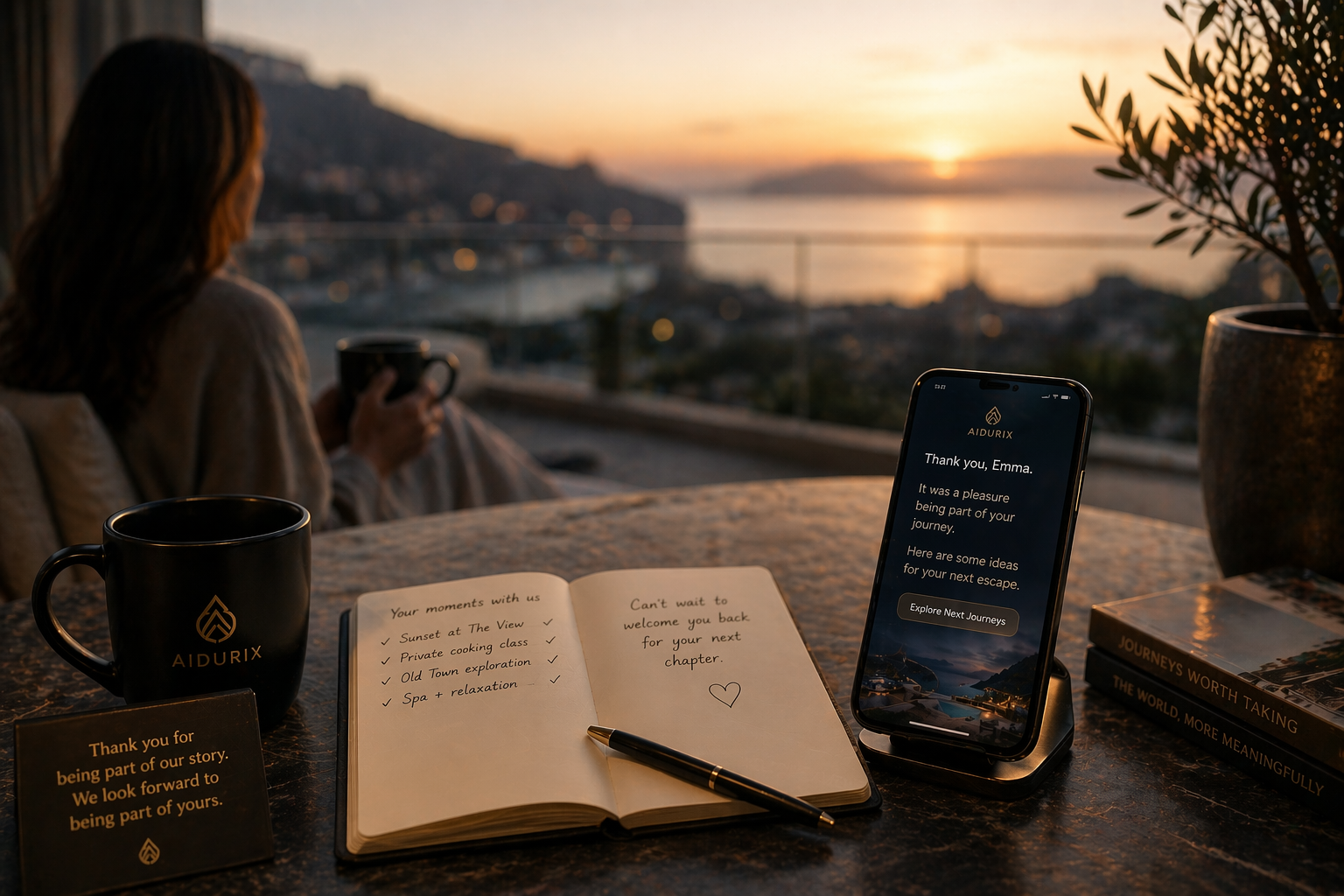
Everything this article has argued points toward a single practical question: how does a hotel team develop the capacity to read, interpret, and respond to signal intelligence across the full traveler journey when they are already managing the full complexity of a hospitality operation in real time?
AIDURIX exists to answer that question, and it does so in a way that honors every dimension of the human and AI collaboration this article has described. It is not a course that teaches signal theory and sends teams back to their properties to figure out the implementation on their own. It is not a SaaS platform that collects signal data and presents it in a dashboard that nobody has the context to interpret. It is a living navigation system that meets hotel teams where they are, reads the signal landscape of their specific operation and their specific guest profile, and builds the judgment and the reinforcement over time that makes signal intelligence a durable operational capacity rather than a project that gets deprioritized when the season gets busy.
The pathway from signal intelligence to hyper-personalization to unreasonable hospitality is not a theoretical arc. It is a practical progression that AIDURIX is built to walk hotel teams through at the pace that fits their organizational readiness, their team culture, and the specific character of their property. A boutique property in a secondary market and a full-service hotel in a major gateway city do not need the same navigation path, but they both need the same foundational capacity: the ability to hear what their guests are telling them before, during, and after their stay, and to respond with something that makes those guests feel like the property was built for them specifically.
The Human First design principle that sits at the center of AIDURIX is not marketing language. It is a structural commitment to the belief that AI capability only creates value when the human judgment is developed enough to know what to do with what the AI surfaces. AIDURIX builds both simultaneously, which means that the teams working within it do not end up more dependent on technology. They end up more capable as hospitality professionals, more attuned to the signals their guests are generating, and more confident in their ability to practice the kind of unreasonable hospitality that turns a stay into a story that gets told for years.
For hotel leaders who have been watching the AI conversation accelerate and wondering where their property fits in it, the signal intelligence framework offers something more useful than a technology adoption roadmap. It offers a new way of understanding what the traveler has been trying to tell you all along, from that first Tuesday evening dreaming moment through every signal layer that follows. The signal has always been there. AIDURIX helps you finally hear it clearly enough to respond in a way that changes everything.
Find your direction today with AIDURIX ->
The question I want to leave with every hospitality leader reading this is a genuinely uncomfortable one: if you had access to the full signal picture of your next arriving guest everything they searched, everything they imagined, everything they hoped this trip would be what would you do differently? And what does the honest answer to that question tell you about where your property stands today relative to where it could be? The teams sitting with that question right now and taking it seriously are the ones who will be having a very different conversation about loyalty, differentiation, and what hospitality can mean in 2026 and beyond.
About AIDURIX: A Human First AI Educational Compass for how hotels move forward. Not a course. Not SaaS. A living navigation system built around who your hotel is, where it stands now, and what leadership needs to hold next. Learn more at aremorch.com
👉 Next Steps
Comment below: Which persona sounds most like your property?
The future of hotels isn’t about flashy gadgets; it’s about embedding intelligence into your very DNA. Dive below the surface and discover the hidden engine that will reinvent everything you thought you knew about hospitality.
See you beneath the waves!
And if you’re ready to take the first step, I invite you to join me for a complimentary 60-minute Hotel AI Consultation. Together, we’ll unlock what AI can do for your brand. Send me a DM on LinkedIn to learn more.
Ready to Transform Your Hotel? Discover how AI and innovative education can redefine hospitality. Let’s start the conversation!
Contact me today to discuss how we can leverage your hotel’s AI, social media, and creative content to revolutionize your hotel and create a truly unique and unforgettable guest experience.
This collaboration will allow us to:
- Assess your specific needs and goals: We’ll work together to identify the key areas where AI can make the biggest impact on your business.
- Develop customized AI agent personas: We’ll craft AI agents that embody your brand and resonate with your target audience.
- Implement and integrate AI solutions: We’ll seamlessly integrate AI into your existing systems and workflows, ensuring a smooth transition and minimal disruption.
- Provide ongoing support and optimization: We’ll continuously monitor and refine your AI agents to ensure they’re delivering exceptional results.
By partnering together, we can create a truly exceptional hospitality culture where AI and humans thrive together and provide a thrilling experience for everyone involved. Let’s shape the future of hospitality together.
Over to you
The hotel industry is always changing, especially during a time of crisis. Make sure to future-proof your business and continue attracting new guests by investing in these solutions.
Propel Your Hotel’s Success with the Ultimate Digital Transformation Coach!
Don’t let your hotel be left in the shadows of its competitors!
Take charge of your future and embrace the digital revolution by reaching out to Are Morch – the visionary Digital Transformation Coach who is poised to lead you towards an exciting, prosperous future.
Contact us today and embark on the most thrilling chapter of your hotel’s journey!
Related article: The Genesis of AI in Hospitality: A Prelude to Personalization
We are in this together!
I must let you all know we are working on this together. I am here to listen if you need to vent, talk, cry, or have someone to talk to.
Where can you reach me?
Email: hotelblogger@aremorch.com
NEW: Hotel Digital Transformer on LinkedIn
Also, join us on our Facebook group, Hotel Social Media Community.
About Are Morch
🚀 AI Hotel Coach | Digital Transformation Expert | Content Catalyst
With a passion for revolutionizing the hospitality industry, I help hoteliers work smarter, not harder, by embracing AI, digital transformation, and innovation. My mission? To bring people and technology together to transform hotels, creating uncontested market experiences through service, confidence, cooperation, and purpose – empowering your team to elevate the guest experience and community.
Follow me for insights, strategies, and fresh perspectives on how AI is shaping the future of hospitality!
Let’s reimagine the industry, one breakthrough at a time!
Get more from Are on Facebook | Twitter | LinkedIn | Pinterest | Instagram| Podcast | YouTube


